Study the
film.
Straight talk on bodywork, training, recovery, and coming back from injury — what actually moves the needle and when to use it. No hype, no filler, written for people who want to get better, not just sweat.
 Recovery
What Cryotherapy Is For, and What It Is Not For
Cryotherapy is a recovery option, not a treatment. Where it belongs in an athlete's week, why the research base is mostly adults, and the signs that mean stop and get it looked at instead.
Read Training
The Real Difference Between Speed and Agility Training
Two programs both promise speed and agility. They are different skills: one trains a straight-line sprint, the other trains braking and cutting.
Read Training
What Actually Happens When an Athlete Stops Training
Take two weeks off and you feel it in your wind before your legs. Take two months off and it is a different conversation. Detraining is real and it runs in an order: aerobic fitness goes first, speed and power next, and the strength base you built holds on the longest. Here is what you actually lose when you stop training, how fast each piece goes, and how to hold the line through a busy season or come back from a layoff without redoing everything.
Read Training
How to Build a Week That Makes You Faster and More Explosive
You do not add jumps to a sprint week. You build one week that does both. Sprinting and jumping pull from the same place, so the fix is not more work, it is order and spacing: what goes first in a session, where the lift lands, and how much rest sits between two maximal days. Here is how we structure a week so speed and power build each other instead of fighting.
Read Training
What Should You Ask a Sports Performance Coach Before You Commit?
"He seems nice, but how do I know if he's actually good?" It's the question every parent thinks and rarely asks out loud. Here is the exact list we would hand a parent to use on us: what gets measured before anything gets programmed, which certifications actually mean something, what supervision looks like at different group sizes, how the plan changes in-season, and what a good first session should feel like for a nervous kid.
Read Training
What Is Sports Performance Training, and Who Actually Needs It?
"Is this just personal training with a different name?" It is the question we get most, and it deserves a straight answer. Sports performance training is coaching aimed at what your sport asks of you — acceleration, top speed, the ability to stop and go again, and the durability to repeat all of it for a season — and it is scored on the field rather than in the mirror. Here is the plain definition, the six blocks an actual session is built from, who genuinely needs it, and who is better off with general training for now.
Read Recovery
Why Recovery Stalls, and What a Coach Looks At First
You are putting in the work and the numbers stopped moving. That is not a motivation problem, and the answer is almost never "train harder." A plateau is a signal, and a coach reads it in a set order: sleep, training load, recovery debt, fuel, then the program. Here is the checklist we run first, and why recovery is usually where the stall is hiding, not effort.
Read Training
Personal Trainer or Sports Performance Coach: What Is the Difference?
"He already has a trainer, so does he need this too?" It is the first question Ocean Township parents ask, and it deserves a straight answer instead of a sales pitch. Both jobs are real. They are aimed at different targets, and the target decides what gets tested and what order the work goes in. A general program tracks bodyweight, reps, and how you look. Athletic development tracks a 10-yard split, a 5-10-5, and jump output, and it puts the sprint work first while the legs are fresh. Here is the honest breakdown, including where a general trainer wins.
Read Training
Strong but Slow: Why Your Squat Isn't Making You Faster
You put up real numbers in the weight room and still get run down on the field by someone who squats less. That is not a strength problem, it is a speed problem, and they are two different skills. A max squat is force over about a full second; a sprint step asks for force in about a tenth of one, in a direction you probably never trained. Here is why your squat isn't making you faster, and what a speed-focused week actually looks like.
Read Training
What Age Can Kids Start Strength and Speed Training?
"What age can my kid start strength and speed training?" It's the question we hear most from Ocean Township parents, usually with a quieter one underneath it: is this safe? The honest answer is earlier than most people think, around 7 or 8 for structured strength and even earlier for speed, as long as "start" means coaching and skill, not a loaded barbell. Here's the real progression by age, why it won't stunt growth (per the NSCA and AAP), and how to know your kid is ready.
Read Training
How Fast Is "Fast"? Speed Benchmarks for High School Athletes
A 39 km/h reading off a game GPS unit looks blazing until you set it next to Usain Bolt's 44.72 km/h and realize it converts to a track 100m somewhere around 10.8 to 11.2 seconds. For high school athletes, "fast" is not one number. Game speed and track speed are different tests, run on different surfaces in different shoes. Here are the real 40-yard, flying-10, and top-speed ranges we reference in Ocean Township, why the numbers don't transfer, and how to test yours so it actually means something.
Read Training
Training Through a Jersey Shore Summer: How to Not Cook Yourself in July and August
July and August on the Jersey Shore look like a workout and function like slow damage if you don't train them right. Wet-bulb globe temperature above 82°F changes what a session is; fluid loss above 2 percent of body weight is where performance falls off. Here's the summer playbook we run in Ocean Township — heat acclimatization ramp, hydration by the minute, warning signs, and how to keep progressing instead of just surviving.
Read Training
Football Preseason in Ocean County: The Six-Week Build That Actually Holds Up
Mid-August camp is six weeks out. The athletes who show up able to compete on day one didn't just "work out this summer" — they built. Here's the six-week framework we run with high school and college players across Ocean Township, Asbury Park, Long Branch, and the rest of Monmouth County, and the mistakes that show up in the first scrimmage of every season.
Read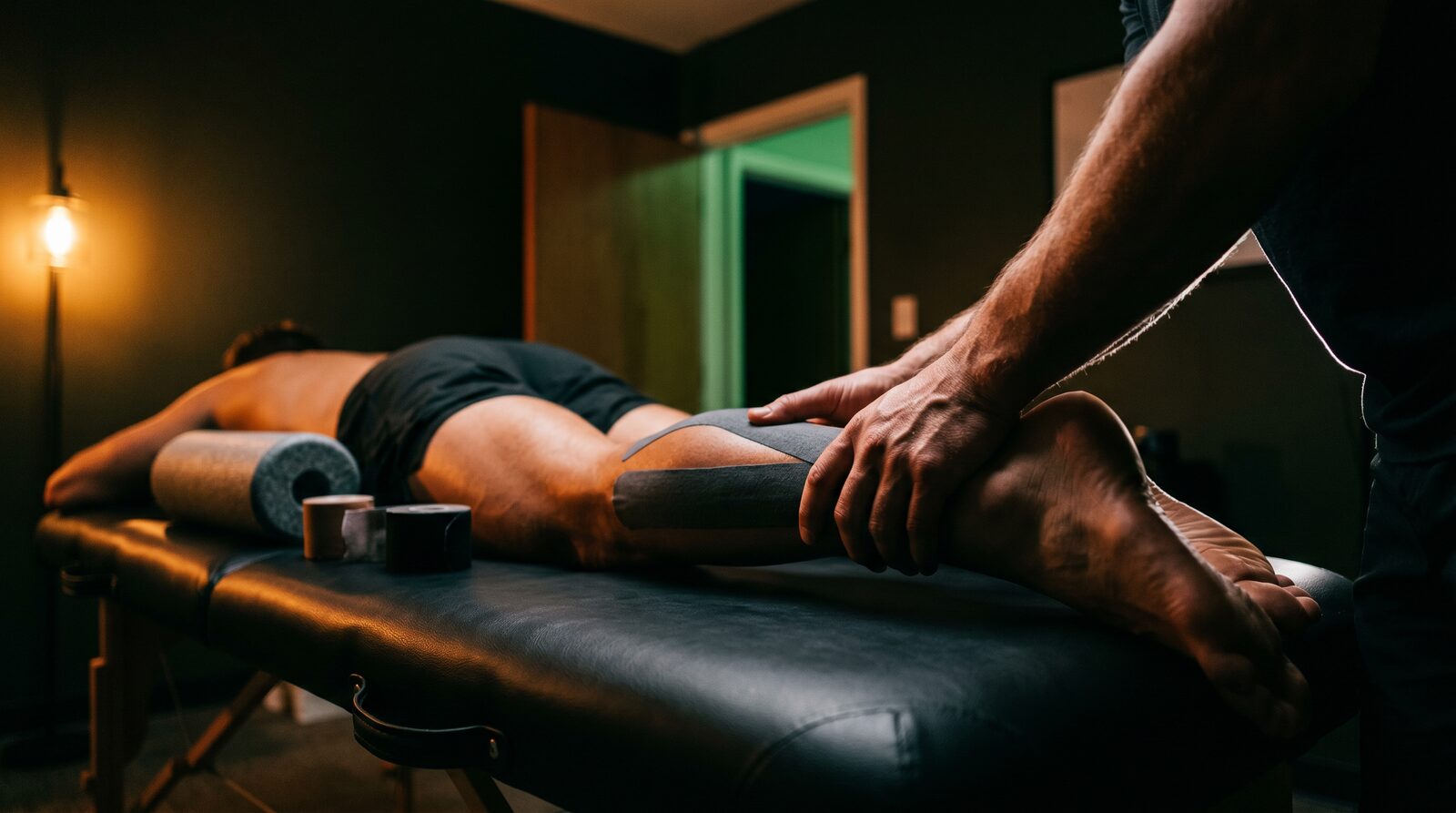 Recovery
What Sports Massage Actually Does — And When to Book One
Sports massage isn't a spa treatment with a different name. It's hands-on work that changes how your body moves and how it perceives pain — and the timing of when you book it matters as much as the work itself.
Read Rehab
RehabComing Back From an Injury Without Going Backward
The most dangerous part of an injury isn't the injury — it's the comeback. Return too fast and you re-injure; wait too long and you lose the season. Here's how to read the line between the two.
Read Training
Why Every Program Here Is Half Recovery
You don't get stronger while you train. You get stronger while you recover from training. That's why recovery isn't an upsell here — it's built into the program structure from day one.
Read
Reading’s good. Doing is better.
Every one of these starts the same way — on the table, finding your starting position.