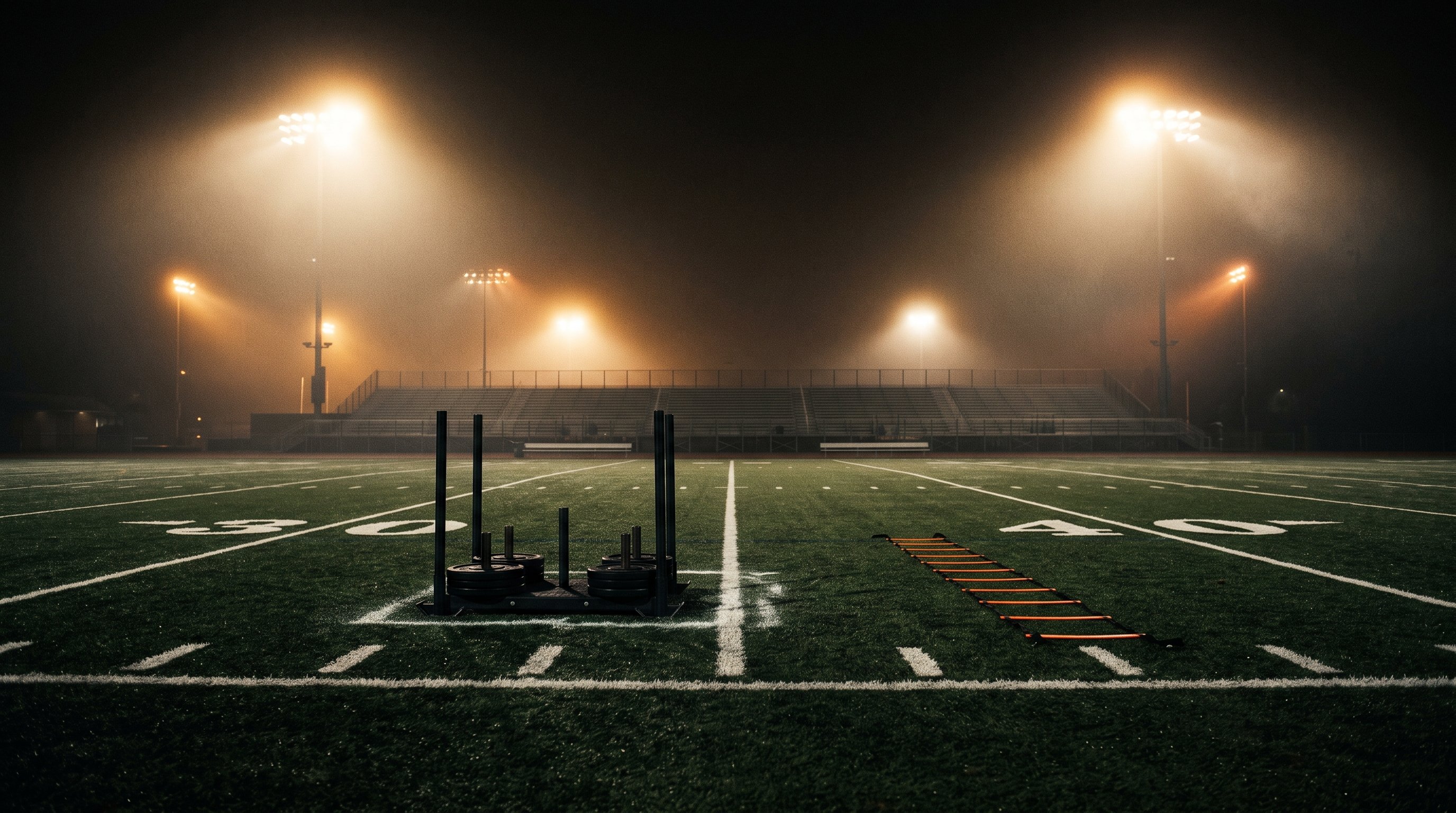
Most kids can begin supervised strength and speed training around age 7 or 8, as soon as they can follow instructions and hold focus for a session. Start with bodyweight and movement skill, add load slowly, and know this: coached youth training does not stunt growth. Here is the honest version.
This is the single most common question parents ask us, and it usually comes wrapped in a second one they do not say out loud: is this safe? Both are fair. So here is the straight answer, backed by the people who actually study it, and written for parents in Ocean Township, Oakhurst, Asbury Park, Long Branch, Eatontown, Neptune, and Tinton Falls who want their kid to get stronger and faster without getting hurt or burned out. Updated July 2026.
What Age Can Kids Actually Start Strength Training?
Around age 7 or 8, once a child can follow coaching and stay focused for a session, they can start structured strength work, and the key word is structured, not heavy. The National Strength and Conditioning Association (NSCA), in its position statement on youth resistance training, is clear that a properly designed and supervised program is safe and effective for children from about age 7, and the American Academy of Pediatrics (AAP) has said the same for years. What changes with age is not whether a kid can train, but how. A seven-year-old is not loading a barbell. A seven-year-old is learning to squat their own bodyweight, hop and land under control, and hold a plank, and that is strength training for that age.
The readiness line is behavioral, not a birthday. A mature six-year-old who listens well may be ready before a distracted nine-year-old. Here is what we look for:
- Can follow two or three step instructions and stay engaged for a short session.
- Wants to be there. Interest from the kid, not pressure from the parent, is what makes it stick.
- Can hold a stable position (a bodyweight squat, a plank) with a coach's cues.
- Handles being corrected without falling apart, because coaching means constant small adjustments.
- Trains under real supervision that scales the work to the child in front of it.
Does Lifting Weights Stunt a Kid's Growth?
No, and this is the myth we spend the most time correcting. The fear that resistance training damages growth plates and stunts height is not supported by the evidence, and both the NSCA and the AAP have said so directly. The old worry came from injury reports tied to unsupervised kids doing max lifts with bad technique, not from coached, age-appropriate training. Under supervision, with technique before load, youth strength training has a strong safety record, better than many of the sports these same kids already play. The growth plates are not the risk. A fourteen-year-old maxing out alone in a garage with no coaching is the risk, and that is a coaching problem, not an age problem.
Worth knowing: when a young child gets stronger, most of that early gain is the nervous system learning to recruit muscle, not the muscle getting bigger. That is why a coached seven-year-old can get noticeably stronger and more coordinated without the bulk people picture when they hear "lifting." The strength is real. It is just built on skill first.
What Should Training Look Like at Each Age?
It changes stage by stage, from play and bodyweight in the early years to loaded barbell work in the late teens, and skipping stages is where kids get hurt or plateau. Here is the progression we use as a map. Every kid moves through it at their own pace, and the ages overlap:
- Stage 1, roughly ages 7 to 9 (foundation): bodyweight and play. Squat, hinge, push, pull, crawl, hop, land, and sprint short distances. The goal is coordination and enjoying movement, not load. Sessions are short and look more like skills than a workout.
- Stage 2, roughly ages 10 to 12 (skill): master bodyweight, then add light external load. Medicine balls, light dumbbells, bands, and sleds teach the patterns with resistance. Technique is the whole point, and reps stay clean, not maximal.
- Stage 3, roughly ages 13 to 15 (build): progressive resistance training. Learn the real lifts, squat, hinge, press, and pull, with light-to-moderate load and strict form, alongside speed and agility work. This is where a well-coached athlete starts to separate.
- Stage 4, roughly ages 16 to 18 (load): true progressive strength training with heavier loads, once technique is genuinely sound. Sport-specific strength, power, and speed come together here, and this is the stage most people picture when they hear "strength training," which is exactly why the three stages before it matter.
The mistake is jumping a fifteen-year-old straight to heavy loading because he is big for his age, when he never built the movement skill in stages one and two. Size is not readiness. Skill is.
When Can a Kid Start Speed and Agility Training?
Even earlier than loaded strength work, because speed, coordination, and agility have their best trainable window in childhood, roughly ages 6 to 12. Young nervous systems pick up movement skills, footwork, change of direction, and sprint mechanics faster than they will at any later point, which is why fundamental movement skill in those years pays off for the rest of an athlete's life. The good news for parents: this is the safe, high-value stuff. Sprinting, skipping, bounding, cutting, and agility games are low-load and high-return, and they build the exact qualities every field and court sport rewards. A kid does not need a barbell to get faster. He needs to sprint, play, and learn to move well, and to start early. The way we test and build that speed as athletes get older is laid out in speed benchmarks for high school athletes.
Isn't a Young Kid Too Small to Get Anything Out of It?
No, because the biggest early wins are coordination, confidence, and injury resistance, not muscle size, and those matter more than a number on a bar. A young athlete who learns to land, decelerate, and control their body is a kid who is far less likely to get hurt when the sport speeds up. That is the quiet benefit parents underrate: good early training is some of the best injury insurance a young athlete can have, because the tissue and the movement skill are built before the sport demands them at full speed. The same principle runs through how we build older athletes for a season, laid out in the six-week preseason build for Ocean County. Build the base first, then add the intensity.
How Does 1st & Goal Train Young Athletes in Ocean Township?
We meet the kid where they actually are, screen the movement first, and scale everything, load, complexity, and session length, to the athlete in front of us, not to their age on paper. That means bodyweight and skill for the youngest, technique-first loading as they mature, and speed and agility woven through all of it because that window matters. We coach the movement before we ever chase a number, and the recovery and durability side is built in, not bolted on, which is the same standard we hold for every athlete who walks in. We work with young athletes and their families across Ocean Township, Oakhurst, Asbury Park, Long Branch, Eatontown, Neptune, and Tinton Falls, from first-time seven-year-olds to varsity recruits. If you are wondering whether your kid is ready and what the right first step looks like, get in touch or walk through the services. Parents deciding who should coach that first step can read personal trainer or sports performance coach. Youth and travel-team families can start on the Tinton Falls training page.
Frequently asked questions about youth strength and speed training
What age can my kid start strength training?
Around age 7 or 8, once a child can follow coaching and stay focused for a session. The NSCA and the American Academy of Pediatrics both support supervised, age-appropriate resistance training from about that age. At the start it is bodyweight and movement skill, not heavy weights, and load is added slowly as technique and maturity grow.
Will strength training stunt my child's growth?
No. The fear that youth resistance training damages growth plates or stunts height is not supported by the evidence, and both the NSCA and the AAP have said so. The real risk factor is unsupervised max-effort lifting with poor technique, which is a coaching problem, not an age problem. Coached, age-appropriate training has a strong safety record.
What is the difference between strength training and lifting heavy weights for kids?
Strength training for a young child means bodyweight work, coordination, and movement skill, not maximal loading. Heavy barbell work belongs to the late teens, after years of building technique in stages. Early strength gains in kids come mostly from the nervous system learning to move better, which is why a young athlete gets stronger and more coordinated without the bulk people picture.
When should a kid start speed and agility work?
Earlier than loaded strength work. Speed, coordination, and agility have their best trainable window roughly between ages 6 and 12, when the nervous system picks up movement skills fastest. Sprinting, skipping, bounding, and change-of-direction games are low-load, high-value, and safe, and they build the qualities every field and court sport rewards.
How do you know if a child is ready to train?
Readiness is about maturity, not a birthday. Look for a kid who can follow two or three step instructions, stay focused for a short session, hold a stable position with coaching, handle being corrected, and actually wants to be there. A mature seven-year-old may be ready before a distracted ten-year-old. Real supervision that scales the work to the child is the non-negotiable.
Do you train youth athletes in Ocean Township and Monmouth County?
Yes. We work with young athletes and their families across Ocean Township, Oakhurst, Asbury Park, Long Branch, Eatontown, Neptune, and Tinton Falls, from first-time seven-year-olds to varsity recruits. Every young athlete is screened first, and load, complexity, and session length are scaled to the child, with speed and agility built in from the start.
The honest bottom line for Ocean Township parents
Your kid can start earlier than you think, as long as "start" means coaching and skill, not a loaded barbell. Around 7 or 8 for structured strength, even earlier for speed and agility, with the load scaled up over years as technique and maturity catch up. It will not stunt their growth, it builds real durability, and the earlier a kid learns to move well the better athlete, and the safer athlete, they become. If you want a straight read on where your young athlete is and what the right first step looks like, get in touch or walk through the services.