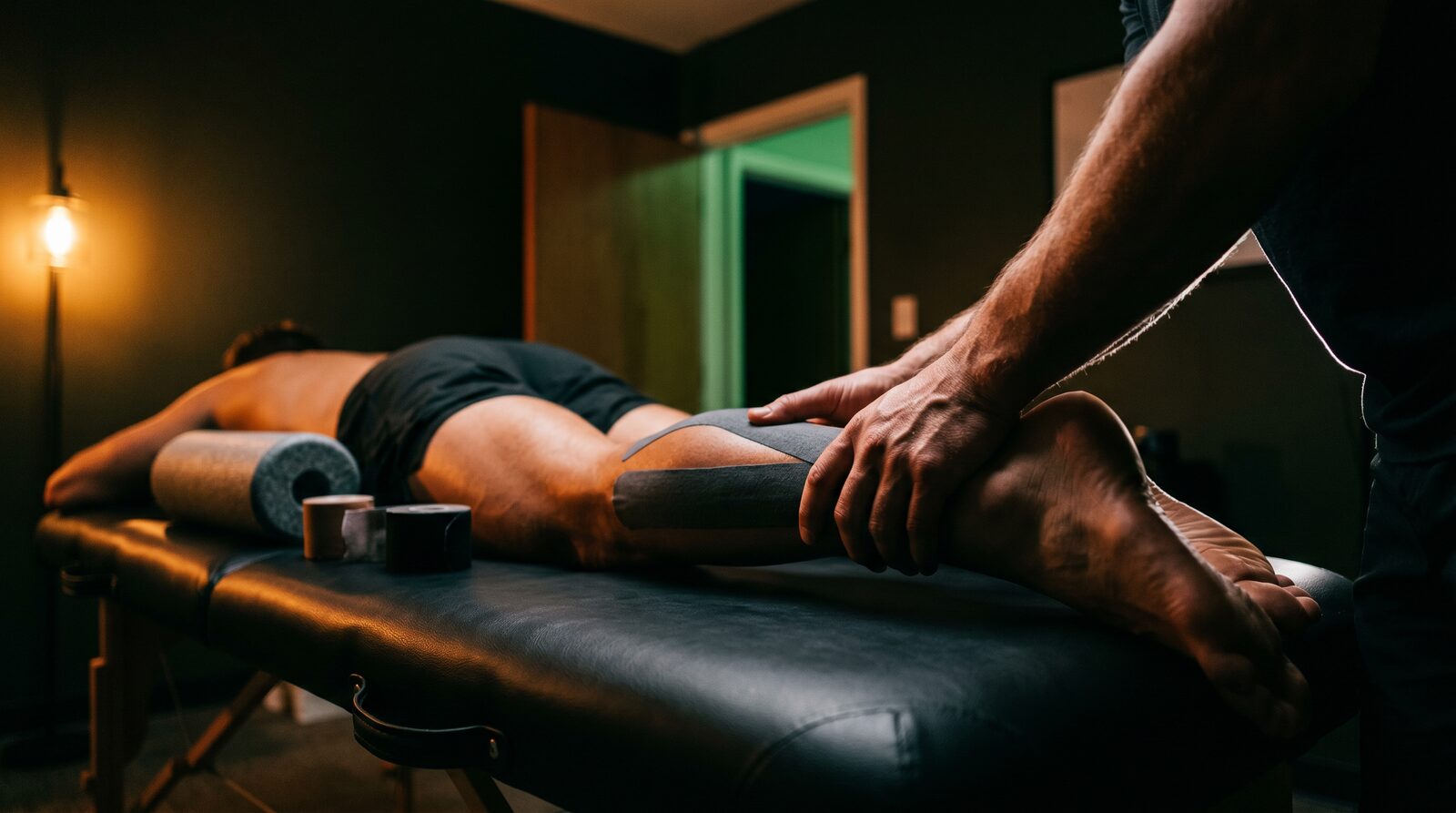
Here's the short version: sports massage is hands-on work aimed at how your body moves and how it perceives pain — not an hour of relaxation that happens to involve a table. The goal is range of motion, less guarding, and getting you back to training or your sport sooner. Relaxation is a side effect, not the point.
People hear "massage" and picture a quiet room and warm towels. That's a real thing, and it has its place. It isn't this. On our table, the work is specific: we're chasing the tissue that's limiting a joint, the spot that's been barking for two weeks, the pattern that keeps tightening every time you lift or run.
How it's different from a spa massage
The difference isn't intensity — a good sports massage isn't just "a harder rubdown." It's intent. A spa massage is built around the experience. A sports massage is built around an outcome: restore the range, calm the area down, and change the input your nervous system is getting from a muscle that's been on high alert.
That last part is the one most people miss. A lot of what feels like "tight" is your nervous system protecting an area, not the muscle being physically short. Good hands-on work changes that signal. That's why people often stand up moving better immediately — nothing structural changed in ten minutes, but the alarm got turned down.
When to book one
Timing is the part nobody explains, so here it is plainly:
- A few days before a game or event. Not the night before. Give the body a window to settle so you show up loose, not sore.
- After a hard training block. When the work has piled up and everything feels a half-step slow, that's the signal — not a luxury, maintenance.
- Around a nagging issue. The tight hip, the cranky shoulder, the calf that won't let go. Earlier is cheaper than later, every time.
- On a schedule, if you train hard. The athletes who stay healthiest treat bodywork like an oil change, not a repair bill.
Who it's for
Not just competitive athletes. We work with varsity players and weekend lifters, but also people coming back from surgery, desk workers whose backs have had enough, and parents who just want to get through the season they signed up for. The programming changes; the principle doesn't. Meet the body where it is and give it a reason to move better.
What a session looks like here
We start by finding your starting position — where it hurts, what's tight, what's limiting you. Then the work is targeted to that, not a generic head-to-toe routine. Most people leave with two or three things to do between sessions, because the table is one input, not the whole plan.
If something's been nagging you, don't wait for it to become an injury. Send us a request or book a sports massage session and we'll find your starting position.